
If you are building or remodeling a home, you may wonder: how many square feet is a master bathroom?
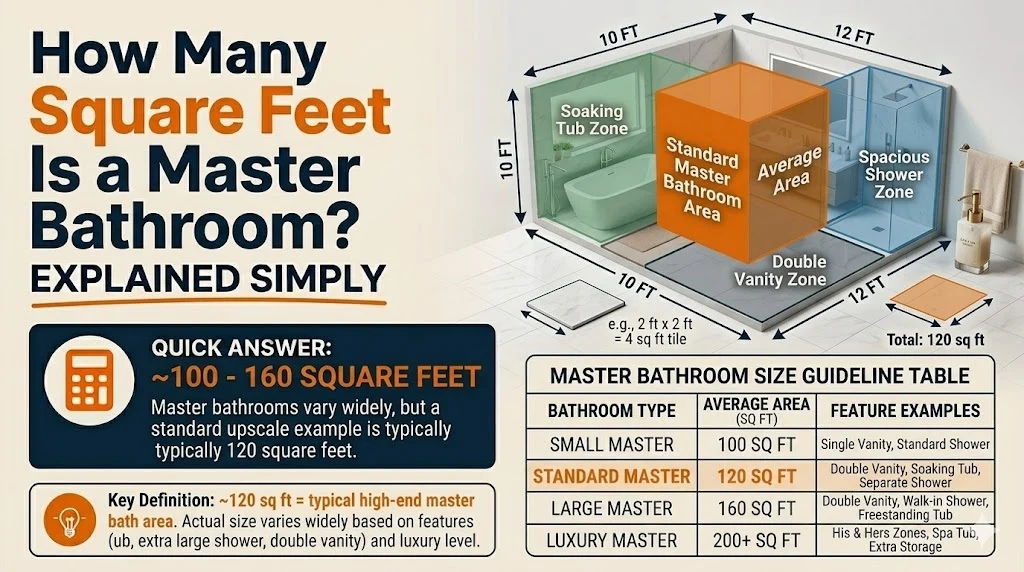
The answer varies depending on the home’s size, layout, and features. However, most master bathrooms range between:
40 to 160 square feet
A typical modern master bathroom is usually around:
100 square feet
Master bathrooms are designed to provide more comfort, privacy, and luxury than standard bathrooms. Many include:
- Double vanities
- Walk-in showers
- Soaking tubs
- Storage cabinets
- Private toilet areas
In this guide, you will learn average master bathroom sizes, standard dimensions, layout ideas, square footage calculations, and expert planning tips.
Average Master Bathroom Size
Master bathrooms come in many sizes, from compact ensuite layouts to spacious spa-style retreats.
Typical Square Footage
Most master bathrooms fall into these ranges:
| Bathroom Type | Average Size |
|---|---|
| Small master bathroom | 40–60 sq ft |
| Standard master bathroom | 80–120 sq ft |
| Large master bathroom | 120–160+ sq ft |
The average master bathroom in newer homes is often about 100 square feet.
Small vs Large Master Bathrooms
Smaller master bathrooms focus on efficiency and may include:
- Single vanity
- Shower/tub combo
- Compact storage
Larger master bathrooms may feature:
- Double sinks
- Separate shower and tub
- Walk-in closets
- Linen storage
- Open layouts
Luxury homes may have bathrooms exceeding 200 square feet.
Standard Master Bathroom Dimensions
Square footage depends on the room’s length and width.
Common Layout Sizes
Popular master bathroom dimensions include:
| Dimensions | Square Feet |
|---|---|
| 5×8 | 40 sq ft |
| 6×10 | 60 sq ft |
| 8×10 | 80 sq ft |
| 10×10 | 100 sq ft |
| 10×12 | 120 sq ft |
| 12×14 | 168 sq ft |
Popular Floor Plans
The most common layout for a standard master bathroom is:
10×10=100 square feet
This size usually provides enough room for:
- Double vanity
- Walk-in shower
- Toilet area
- Basic storage
Larger layouts offer greater comfort and flexibility.
How to Calculate Master Bathroom Square Footage
Calculating bathroom square footage is simple.
Formula Explained
Use this formula:
Square Feet=Length×Width
Measure both dimensions in feet.
Step-by-Step Examples
Small Bathroom
A bathroom measuring 5 feet by 8 feet:
5×8=40
Total size equals 40 square feet.
Standard Bathroom
A bathroom measuring 10 feet by 10 feet:
10×10=100
This equals 100 square feet.
Large Bathroom
A bathroom measuring 12 feet by 14 feet:
12×14=168
This creates a spacious luxury layout.
Types of Master Bathrooms by Size
Different bathroom sizes support different layouts and features.
Small Master Bathrooms
Small master bathrooms typically range from:
- 40 to 60 square feet
Common features:
- Single vanity
- Compact shower
- Limited storage
These bathrooms work well in:
- Condos
- Older homes
- Small floor plans
Medium Master Bathrooms
Medium-sized bathrooms usually range from:
- 80 to 120 square feet
These often include:
- Double sinks
- Walk-in shower
- Linen cabinet
- Better movement space
This is the most common modern layout.
Luxury Master Bathrooms
Luxury master bathrooms may exceed:
- 150 square feet
Features often include:
- Freestanding tub
- Oversized shower
- Makeup vanity
- Heated floors
- Seating areas
- Private toilet room
These bathrooms prioritize comfort and relaxation.
What Fits in a Master Bathroom?
Bathroom size affects what fixtures and features fit comfortably.
Double Vanity
Double vanities usually require:
- 5 to 7 feet of wall space
They are popular because they:
- Improve storage
- Reduce morning congestion
- Increase resale appeal
Walk-In Shower
Walk-in showers generally need at least:
- 3×4 feet
- Larger luxury showers may be 4×6 feet or bigger
Frameless glass designs help bathrooms feel larger.
Bathtub and Storage
Master bathrooms often include:
- Soaking tubs
- Linen cabinets
- Open shelving
- Built-in storage
Larger layouts allow better spacing between fixtures.
Master Bathroom Size Comparison Chart
| Bathroom Dimensions | Square Feet | Typical Features |
|---|---|---|
| 5×8 | 40 sq ft | Compact layout |
| 6×10 | 60 sq ft | Shower + vanity |
| 8×10 | 80 sq ft | Double vanity possible |
| 10×10 | 100 sq ft | Standard master bath |
| 10×12 | 120 sq ft | Tub + shower |
| 12×14 | 168 sq ft | Luxury bathroom |
Factors That Affect Master Bathroom Size
Several factors influence ideal bathroom size.
Home Size
Larger homes usually have larger master bathrooms.
Smaller homes prioritize efficient layouts instead.
Layout Preferences
Some homeowners prefer:
- Large showers
- Oversized tubs
- Extra storage
- Open spa-like layouts
Others prioritize simplicity and functionality.
Budget and Resale Value
Bigger bathrooms cost more due to:
- Plumbing
- Flooring
- Tile
- Fixtures
- Labor
However, updated master bathrooms often improve resale value significantly.
Common Mistakes When Planning a Master Bathroom
Bathroom design errors can reduce comfort and efficiency.
Poor Layout Design
A large bathroom can still feel cramped if:
- Fixtures are poorly placed
- Doors swing awkwardly
- Traffic flow is blocked
Layout matters as much as square footage.
Not Enough Storage
Many homeowners underestimate storage needs.
Consider:
- Towels
- Toiletries
- Cleaning supplies
- Extra linens
Built-in storage helps reduce clutter.
Oversized Fixtures
Large tubs or oversized vanities can overwhelm smaller spaces.
Always balance fixture size with room dimensions.
Expert Tips for Designing the Right Master Bathroom
Professionals recommend planning for both comfort and practicality.
Prioritize Function First
Beautiful bathrooms should also be easy to use daily.
Leave Open Walking Space
Avoid overcrowding fixtures.
Good spacing improves comfort and accessibility.
Consider Future Needs
Aging-in-place features like:
- Curbless showers
- Wider walkways
- Grab bar support
can improve long-term usability.
Focus on Lighting
Good lighting makes bathrooms feel:
- Larger
- Cleaner
- More luxurious
Layered lighting works best.
FAQs
1. What is the average size of a master bathroom?
Most master bathrooms range between 80 and 120 square feet.
2. Is 100 square feet enough for a master bathroom?
Yes. A 100-square-foot bathroom is considered a comfortable standard size for modern homes.
3. What is the minimum size for a master bathroom?
Small master bathrooms can be around:
40 square feet
However, space may feel limited.
4. Can a master bathroom have both a tub and shower?
Yes. Most bathrooms larger than 100 square feet can comfortably fit both.
5. Does a larger master bathroom increase home value?
In many cases, yes. Updated and spacious master bathrooms are attractive to buyers and can improve resale value.
Conclusion
So, how many square feet is a master bathroom?
Most master bathrooms range between:
40 and 160 square feet
The average modern master bathroom is usually around:
100 square feet
The ideal size depends on your:
- Home layout
- Budget
- Lifestyle
- Storage needs
- Desired features
Whether you prefer a compact ensuite or a luxury spa-style retreat, understanding square footage helps you design a master bathroom that feels functional, comfortable, and valuable for years to come.
Discover More Articles
How Many Square Feet Per Bag of Concrete?