
If you are planning to build, repair, or replace a driveway, one of the first questions you may ask is:
“How many square feet is an average driveway?”
Driveways vary widely depending on:
- Number of vehicles
- Property size
- Home design
- Local building codes
- Parking needs
However, there are standard driveway sizes used in residential construction that help estimate square footage and material requirements.
The quick answer is:
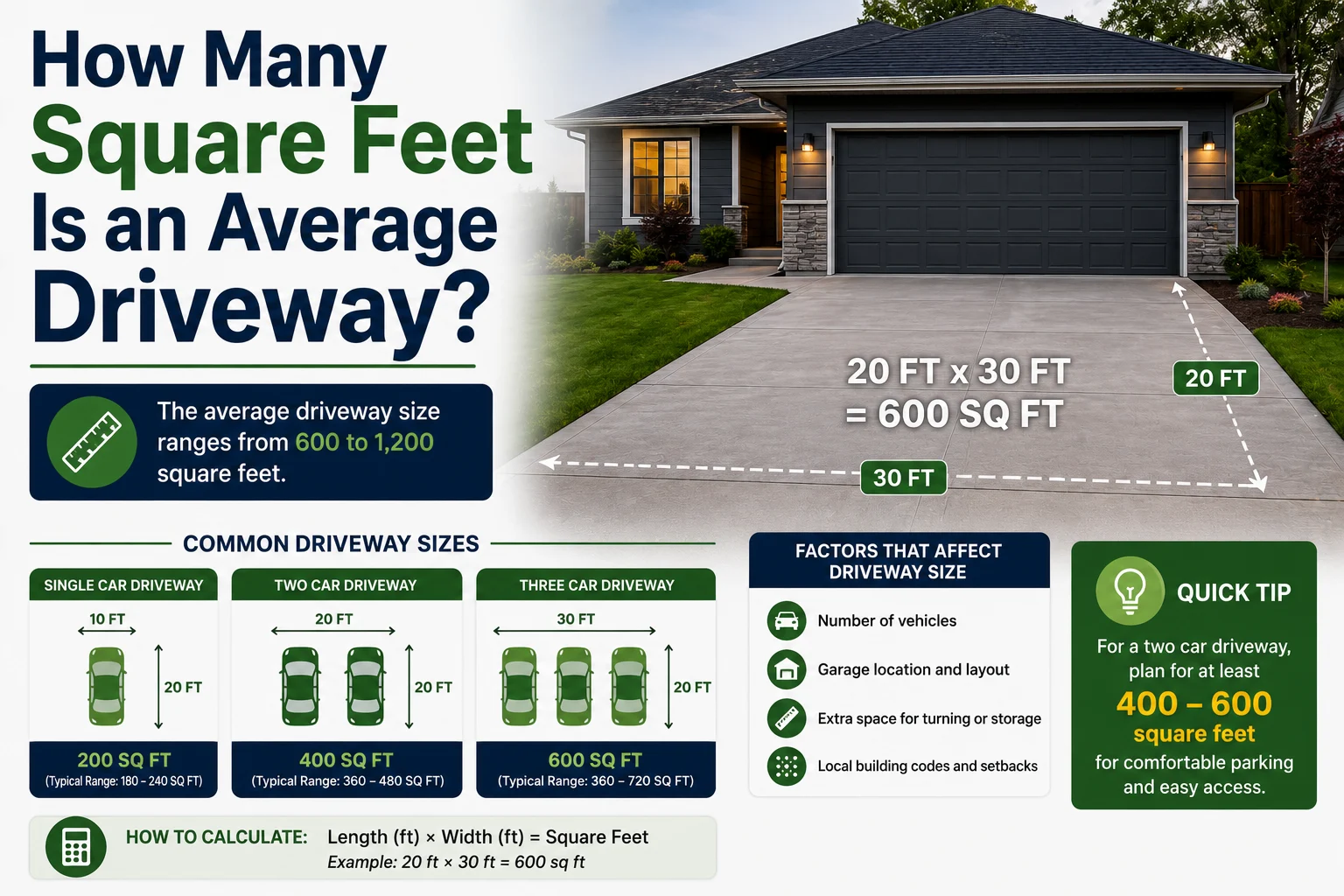
An average residential driveway is between 400 and 1,000 square feet.
A typical two-car driveway is most commonly around:
- 600 to 800 square feet
In this complete guide, you will learn:
- Average driveway square footage
- Standard driveway dimensions
- Single vs double vs RV driveways
- How to calculate driveway size
- Material estimates (concrete, asphalt, gravel)
- Cost considerations
- Real-world examples
- Design tips
- Common mistakes
What Is a Driveway?
A driveway is:
- A private paved or gravel surface
- Used for vehicle access and parking
- Connected from the street to a garage or home
Driveways are made from:
- Concrete
- Asphalt
- Pavers
- Gravel
Average Driveway Size in Square Feet
Most residential driveways fall within this range:
400–1000 square feet
Typical breakdown:
- Small driveway: 400–600 sq ft
- Standard driveway: 600–800 sq ft
- Large driveway: 800–1,200+ sq ft
Standard Driveway Dimensions
Driveway size is calculated using:
Square Feet=Length×Width
1. Single-Car Driveway
Typical size:
- 10 ft × 20 ft to 12 ft × 25 ft
Example:
10×20=200 sq ft
Up to:
12×25=300 sq ft
Total:
- 200–300 sq ft
2. Two-Car Driveway (Most Common)
Typical size:
- 20 ft × 20 ft to 24 ft × 30 ft
Example:
20×20=400 sq ft
Up to:
24×30=720 sq ft
Total:
- 400–720 sq ft (most common range)
3. Three-Car Driveway
Typical size:
- 30 ft × 20 ft to 36 ft × 30 ft
Example:
30×20=600 sq ft
Up to:
36×30=1080 sq ft
Total:
- 600–1,080 sq ft
What Is the Average Driveway Size?
Most U.S. homes have:
A two-car driveway averaging 600–800 square feet
This includes:
- Parking space for 2 vehicles
- Extra room for door opening
- Small walking area
Driveway Size by Type of Home
Small Homes
- 1-car driveway
- 200–300 sq ft
Standard Suburban Homes
- 2-car driveway
- 600–800 sq ft
Large Homes
- 3–4 car driveway
- 900–1,500 sq ft
How to Calculate Driveway Square Footage
To calculate driveway size:
Length×Width
Example Calculation
Driveway:
- 22 ft × 25 ft
22×25=550 sq ft
Driveway Shapes and Their Impact
Driveways are not always rectangular.
Common shapes:
- Straight
- Curved
- Circular turnaround
- L-shaped
Irregular shapes require:
- Breaking into sections
- Adding total areas
Materials Used in Driveways
Concrete Driveways
- Long-lasting
- Low maintenance
- Higher upfront cost
Asphalt Driveways
- Flexible
- Cheaper than concrete
- Needs resealing
Gravel Driveways
- Most affordable
- Easy installation
- Requires maintenance
Paver Driveways
- Decorative
- High-end appearance
- Expensive
Material Estimates by Square Foot
Typical usage per sq ft:
- Concrete: 4–6 inches thick
- Asphalt: 2–4 inches thick
- Gravel: 3–6 inches base layer
Cost of an Average Driveway
Costs depend on material and size.
Concrete
- $6 to $12 per sq ft
Asphalt
- $3 to $7 per sq ft
Gravel
- $1 to $3 per sq ft
Example Cost Calculation
For a 700 sq ft driveway:
Concrete:
700×8=5600 USD (approx)
At $8 per sq ft average.
Why Driveway Size Matters
Proper sizing affects:
- Parking comfort
- Vehicle safety
- Property value
- Aesthetic appearance
Common Driveway Design Mistakes
Too Narrow
Minimum width needed:
- 10–12 ft per car
Not Enough Turning Space
Hard to maneuver vehicles.
Ignoring Drainage
Poor slope causes:
- Water pooling
- Surface damage
Underestimating Size
Always plan extra space for:
- Doors opening
- Walking paths
Driveway Width Recommendations
| Driveway Type | Width |
|---|---|
| Single-car | 10–12 ft |
| Two-car | 20–24 ft |
| Three-car | 30–36 ft |
Driveway Length Recommendations
Typical length:
- 20–40 ft
Depends on:
- Garage position
- Street setback
Driveway vs Parking Lot
A driveway is:
- Private residential access
A parking lot is:
- Larger commercial space
Driveway Expansion Options
Homeowners often expand driveways for:
- Extra parking
- RV storage
- Boat storage
Environmental Considerations
Permeable driveways help:
- Water drainage
- Reduce runoff
- Improve sustainability
Maintenance Tips
Concrete
- Seal every 2–3 years
Asphalt
- Reseal every 3–5 years
Gravel
- Re-level annually
FAQs
How many square feet is an average driveway?
Typically 600–800 sq ft
How big is a 2-car driveway?
20×20=400 to 24×30=720 sq ft
What is the smallest driveway size?
- Around 200–300 sq ft
What is the largest driveway size?
- 1,000+ sq ft for large homes
How do you calculate driveway square footage?
Length×Width
Final Thoughts
So, how many square feet is an average driveway?
Most residential driveways range from 400 to 1,000 square feet, with 600–800 square feet being the most common size for a two-car driveway.
Understanding driveway size helps with:
- Budget planning
- Material estimation
- Construction design
- Property improvement
- Parking convenience
Whether you are building a new driveway or upgrading an old one, knowing the correct square footage ensures a functional, durable, and properly designed space for your home.