

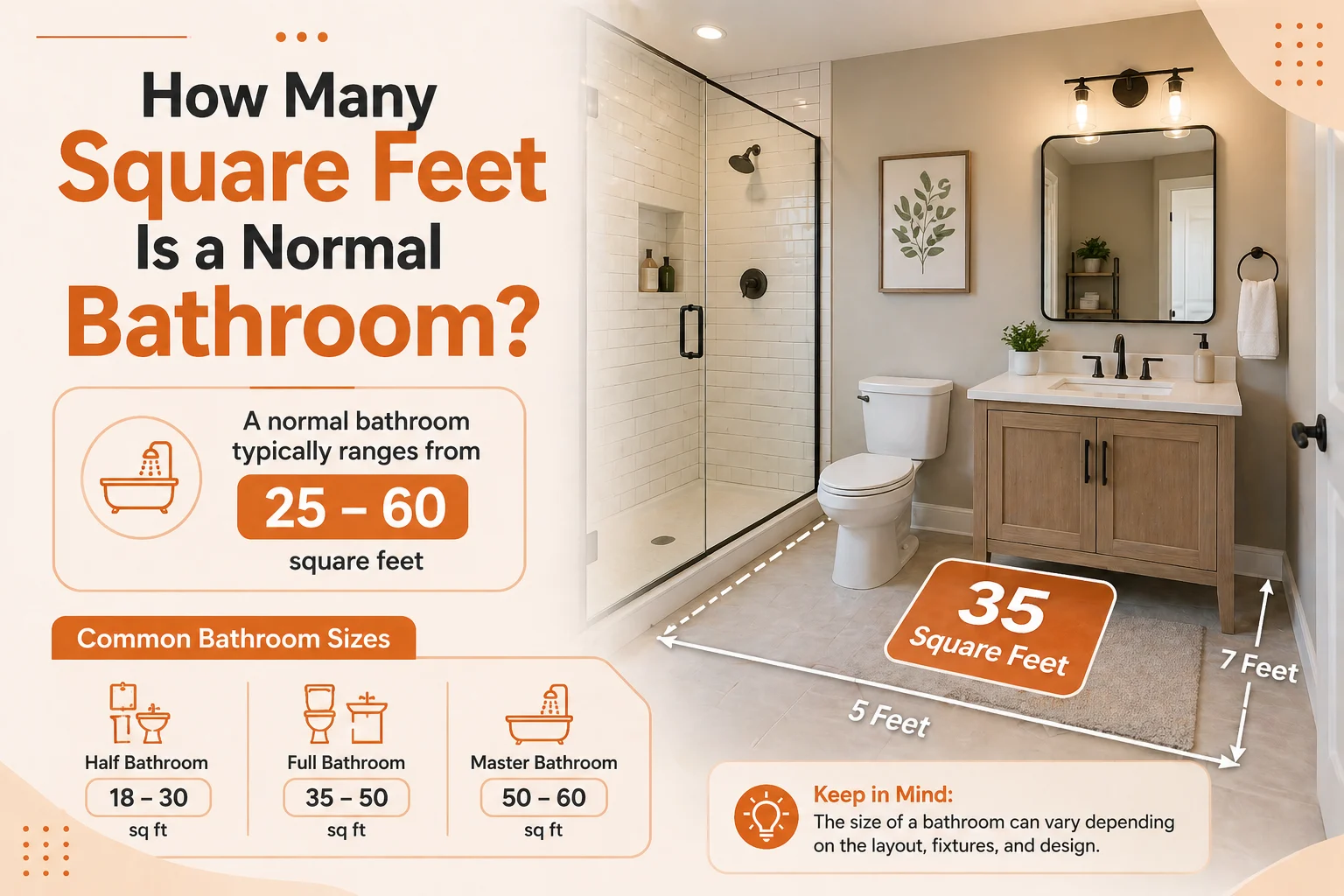
If you are planning a home renovation or building a new house, you may be wondering how many square feet is a normal bathroom. This is one of the most common questions in home design because bathroom size affects comfort, layout, and overall functionality.
The answer depends on the type of bathroom. A small bathroom can be as little as 20 square feet, while a large master bathroom can exceed 100 square feet. Understanding these differences will help you design a space that fits your needs and budget.
In this guide, you will learn average bathroom sizes, how to measure them, and how to plan your space effectively.
What Is a Normal Bathroom Size
A normal bathroom size is not fixed. It varies based on the purpose of the bathroom and the available space in your home.
In general, most standard bathrooms fall between 40 and 60 square feet. This size allows enough room for a toilet, sink, and either a shower or bathtub.
Bathroom size matters because it affects comfort, movement, and usability. A well-sized bathroom makes daily routines easier and more enjoyable.
Average Bathroom Sizes by Type
Different types of bathrooms have different size ranges.
Half Bathroom
A half bathroom, also called a powder room, usually measures between 15 and 25 square feet.
It typically includes:
Toilet
Small sink
This type is common in guest areas and small homes.
Full Bathroom
A full bathroom usually ranges from 40 to 60 square feet.
- It includes:
- Toilet
- Sink
- Shower or bathtub
This is the most common bathroom type in homes.
Master Bathroom
A master bathroom is larger and more luxurious. It typically ranges from 70 to 150 square feet or more.
- It may include:
- Double sinks
- Separate shower and bathtub
- Extra storage space
Small Bathroom
A small bathroom can be around 20 to 35 square feet.
It is designed to fit essential fixtures in a compact space, often seen in apartments or older homes.
Typical Bathroom Dimensions in Feet
Here are some common bathroom dimensions:
5 ft × 8 ft equals 40 square feet
6 ft × 8 ft equals 48 square feet
7 ft × 10 ft equals 70 square feet
These layouts are widely used because they balance space and functionality.
How to Calculate Bathroom Square Footage
Measuring your bathroom is simple.
- First, measure the length and width of the space in feet.
- Then multiply the two numbers to get the total square footage.
- For example, if your bathroom is 5 feet wide and 8 feet long:
- 5 × 8 equals 40 square feet
If your bathroom has an irregular shape, divide it into smaller rectangles, calculate each area, and then add them together.
Bathroom Size Comparison Table
| Bathroom Type | Average Size (Sq Ft) | Features |
|---|---|---|
| Half Bathroom | 15 to 25 | Toilet and sink |
| Small Bathroom | 20 to 35 | Compact layout |
| Full Bathroom | 40 to 60 | Toilet, sink, shower or tub |
| Master Bathroom | 70 to 150+ | Luxury features |
Factors That Affect Bathroom Size
Several factors influence how big a bathroom should be.
Available space in your home is the biggest factor. Smaller homes often have compact bathrooms, while larger homes allow bigger designs.
The number of users also matters. Shared bathrooms need more space for comfort.
Fixture choices affect size as well. A bathtub takes more space than a shower, and double sinks require extra width.
Layout Tips for Different Bathroom Sizes
For small bathrooms, use space-saving fixtures like wall-mounted sinks and sliding doors. Keep the layout simple to avoid clutter.
For medium-sized bathrooms, focus on balance. Place fixtures efficiently to allow easy movement.
For large bathrooms, you can add luxury features like double vanities, separate showers, and storage cabinets.
Good layout planning can make even a small bathroom feel spacious.
Common Mistakes
Many people make mistakes when planning bathroom size.
One common mistake is underestimating the space needed for movement. Even if fixtures fit, the bathroom may feel cramped.
Another mistake is ignoring storage. Without proper storage, the space becomes messy quickly.
Poor layout planning can also waste space, making the bathroom less functional.
Expert Tips
Always plan at least 30 inches of clearance space in front of fixtures for comfort.
Choose compact fixtures if space is limited.
Use light colors and mirrors to make small bathrooms look bigger.
Think about ventilation and lighting when planning your layout.
Benefits of Knowing Bathroom Size
Understanding how many square feet is a normal bathroom helps you design better spaces.
It allows you to plan layouts efficiently, avoid overcrowding, and choose the right fixtures.
It also helps in budgeting and ensures your bathroom meets modern standards.
FAQs
- How many square feet is a standard bathroom?
A standard bathroom is usually between 40 and 60 square feet. - What is the smallest bathroom size?
The smallest bathrooms can be around 15 to 20 square feet, typically half bathrooms. - How big is a master bathroom?
A master bathroom usually ranges from 70 to 150 square feet or more. - Is 40 square feet enough for a bathroom?
Yes, 40 square feet is enough for a full bathroom with basic fixtures. - How do I calculate bathroom size?
Multiply the length by the width of the bathroom in feet to get square footage.
Conclusion
So, how many square feet is a normal bathroom? Most standard bathrooms fall between 40 and 60 square feet, while smaller ones can be around 20 square feet and larger master bathrooms can exceed 100 square feet.
The ideal size depends on your needs, available space, and layout preferences. By understanding bathroom dimensions and planning carefully, you can create a space that is both functional and comfortable.