

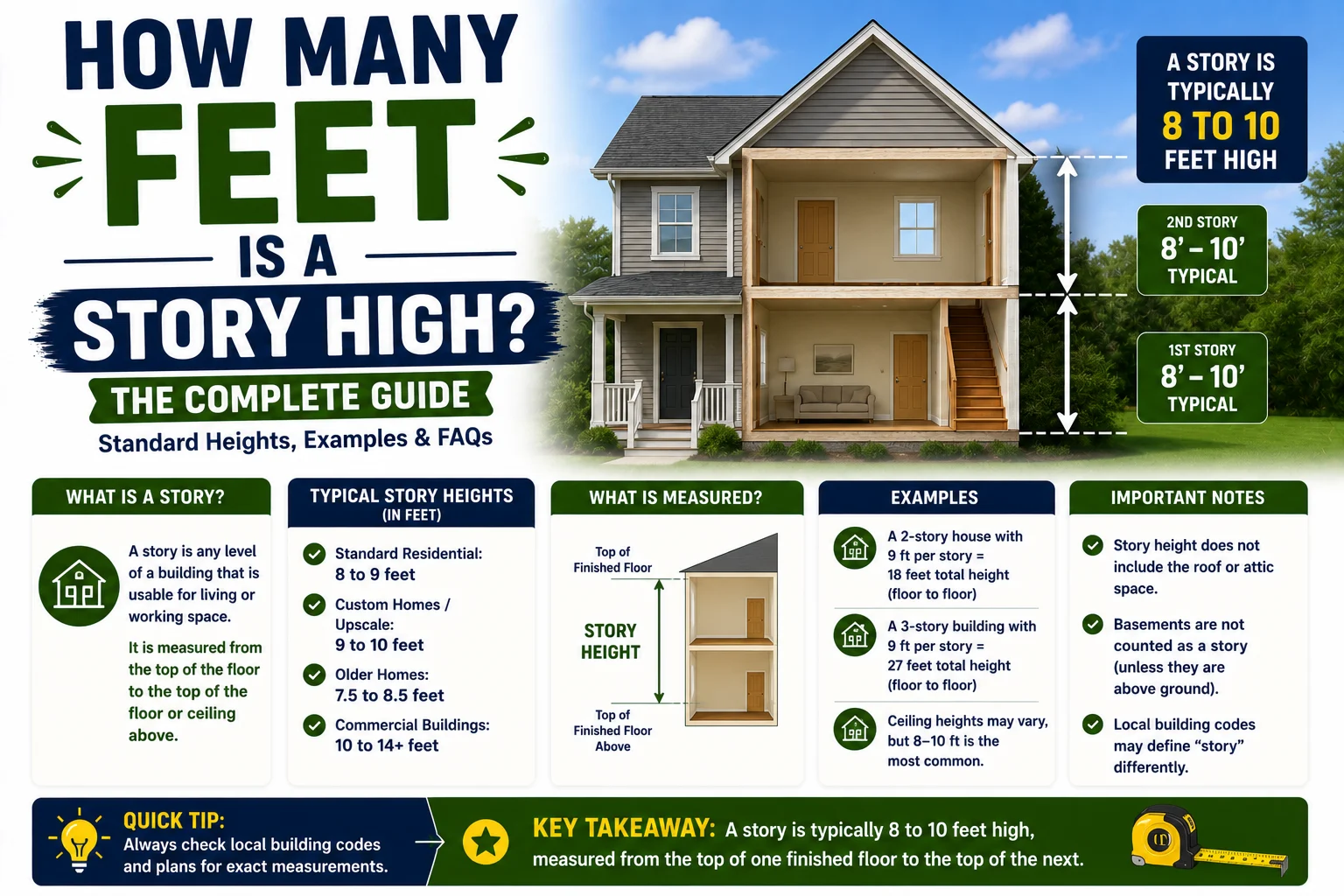
When discussing buildings, homes, apartments, offices, or skyscrapers, one of the most common questions people ask is:
How many feet is a story high?
The answer is not always straightforward because a “story” is not a fixed measurement. The height of a story depends on the building type, ceiling height, floor structure, mechanical systems, and architectural design.
For example, a story in a residential home may be significantly shorter than a story in a commercial office building. Likewise, a story in a modern skyscraper can vary considerably from floor to floor.
Understanding story height is useful for:
- Construction planning
- Real estate evaluations
- Building design
- Height estimation
- Property development
- Architecture studies
This guide explains how many feet a story typically measures, why story heights vary, and how to estimate the height of buildings based on the number of stories.
Quick Answer
In most cases:
One story is approximately 10 to 14 feet high.
A commonly used average is:
1 story≈10 feet
For many rough estimates:
- 1 story ≈ 10 feet
- 2 stories ≈ 20 feet
- 3 stories ≈ 30 feet
However, actual building heights often differ.
What Is a Story?
A story (or storey) is a level of a building.
Examples include:
- First floor
- Second floor
- Third floor
Each story includes:
- Floor structure
- Ceiling space
- Mechanical systems
- Occupied living or working space
Because of these components, story height is greater than ceiling height alone.
Standard Residential Story Height
Most modern homes have:
- 8-foot ceilings
- 9-foot ceilings
- 10-foot ceilings
However, the floor system adds additional height.
Typical residential story heights are:
| Ceiling Height | Total Story Height |
|---|---|
| 8 feet | 9–10 feet |
| 9 feet | 10–11 feet |
| 10 feet | 11–12 feet |
Therefore:
Most residential stories are about 10 feet tall.
Why a Story Is Taller Than the Ceiling
Many people assume an 8-foot ceiling means an 8-foot story.
This is incorrect.
A story also includes:
- Floor joists
- Subfloor materials
- HVAC ducts
- Electrical wiring
- Plumbing systems
These components add extra vertical space.
Typical Single-Story House Height
Many single-story homes are approximately:
10 to 15 feet tall
depending on roof design.
A home with a steep roof may appear much taller than the story height alone.
Typical Two-Story House Height
For rough estimates:
2×10=20 feet
However, when roof height is included:
Most two-story homes measure:
- 20 to 30 feet tall
from ground level to roof peak.
Typical Three-Story House Height
Using the standard estimate:
3×10=30 feet
Actual building height may reach:
- 30 to 40 feet
depending on roof style.
Commercial Building Story Height
Commercial buildings generally have taller stories than homes.
Reasons include:
- Larger HVAC systems
- Suspended ceilings
- Electrical infrastructure
- Open floor plans
Typical commercial story heights range from:
12 to 14 feet per story
Office Building Story Heights
Modern office buildings commonly use:
| Building Type | Average Story Height |
|---|---|
| Small office | 12 feet |
| Mid-rise office | 13 feet |
| High-rise office | 14 feet |
This additional height improves comfort and accommodates building systems.
Retail Building Story Heights
Retail stores often require:
- Large signs
- Open interiors
- Mechanical equipment
As a result, first-floor retail spaces may reach:
15 to 20 feet
or more.
Apartment Building Story Heights
Apartments typically fall between residential and commercial standards.
Average story heights:
- 10 feet
- 11 feet
- 12 feet
depending on construction type.
Skyscraper Story Heights
Skyscrapers vary significantly.
Average floors often measure:
12 to 14 feet
Luxury towers may exceed this.
Mechanical floors can be even taller.
Estimating Building Height by Stories
A common rule of thumb is:
Residential Buildings
Height=Stories×10
Commercial Buildings
Height=Stories×12
Story-to-Feet Conversion Chart
| Stories | Approximate Height |
|---|---|
| 1 | 10 feet |
| 2 | 20 feet |
| 3 | 30 feet |
| 4 | 40 feet |
| 5 | 50 feet |
| 10 | 100 feet |
| 20 | 200 feet |
| 50 | 500 feet |
These figures are estimates.
Example: A 10-Story Building
Using the common estimate:
10×10=100 feet
A 10-story residential building is approximately:
100 feet tall
Example: A 20-Story Office Building
Using 12 feet per story:
20×12=240 feet
Result:
Approximately 240 feet tall
Why Story Heights Vary
Several factors influence story height.
Ceiling Height
Higher ceilings increase overall floor height.
Structural Systems
Steel, concrete, and wood framing require different floor depths.
HVAC Equipment
Commercial buildings often need additional space for:
- Air ducts
- Mechanical rooms
- Ventilation systems
Architectural Design
Luxury homes and high-end offices often feature:
- Vaulted ceilings
- Large entryways
- Decorative features
These increase story height.
Historical Building Story Heights
Older buildings often have:
- Higher ceilings
- Thicker floors
- Decorative architecture
As a result, some historic structures exceed modern standards.
A historic three-story building may be taller than a modern four-story structure.
Fire Codes and Story Height
Building codes often regulate:
- Maximum building height
- Number of stories
- Emergency access requirements
Height measurements may affect:
- Elevator requirements
- Fire suppression systems
- Stairwell design
Roof Height vs Story Height
Story height measures occupied floors.
Total building height includes:
- Roof structure
- Attics
- Mechanical penthouses
- Decorative features
This explains why two buildings with the same number of stories can have different overall heights.
Real Estate Applications
Story height influences:
- Property value
- Interior volume
- Natural lighting
- Architectural appeal
Higher ceilings often increase buyer interest.
Construction Planning
Builders use story heights to estimate:
- Material requirements
- Elevator installation
- Structural loads
- Project costs
Even a one-foot increase per floor can significantly affect a building’s total height.
Common Misconceptions
One Story Is Always 10 Feet
Not necessarily.
Story heights vary by building type.
Ceiling Height Equals Story Height
False.
Structural and mechanical systems add additional height.
All Buildings Use the Same Story Height
Residential, commercial, and industrial buildings often have very different floor heights.
Frequently Asked Questions
How many feet is one story?
Typically:
10 to 14 feet
depending on the building.
Is one story exactly 10 feet?
No.
Ten feet is a common estimate, not an official standard.
How tall is a two-story house?
Usually:
20 to 30 feet
including the roof.
How tall is a three-story building?
Typically:
30 to 40 feet
depending on design.
How tall is a 10-story building?
Often around:
100 to 140 feet
depending on usage.
Conclusion
So, how many feet is a story high?
The most common answer is:
One story is approximately 10 to 14 feet high.
For quick estimates, many people use 10 feet per story, especially for residential buildings. However, actual story heights vary based on ceiling height, structural design, mechanical systems, and building purpose. Commercial buildings, apartment complexes, and skyscrapers often use taller floors than single-family homes. Understanding story height helps with construction planning, architecture, real estate analysis, and estimating the height of buildings from the ground up.